
Diwali
दीपावली
Also known as: Deepavali, Festival of Lights
India's best-known festival of lights, marked by lamps, sweets, family gatherings, temple visits, markets, fireworks, and regional traditions.
Location
India-wide
Duration
5 days
Month (AD)
October/November
Highlights
Diyas, rangoli, sweets, markets, family rituals, temple visits, illuminated streets, and regional new-year observances.
Tips for Visitors
Book transport early and expect heavy shopping crowds and closed shops on Lakshmi Puja day. Dates are lunar and differ slightly by region, so check a local almanac. Protect ears and lungs if sensitive to fireworks, carry sweets if invited to a home, and ask local hosts how the festival is observed in their region.
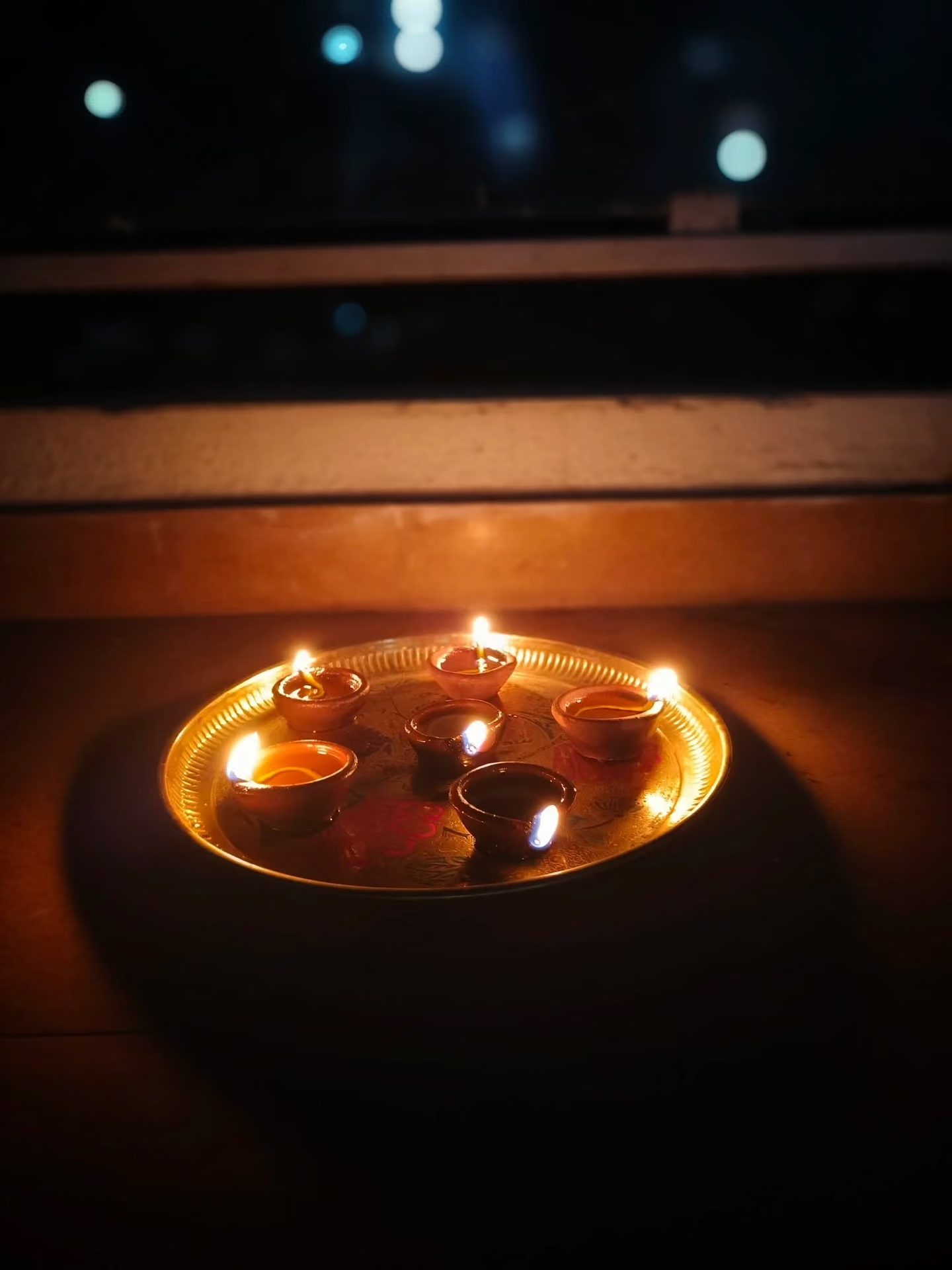
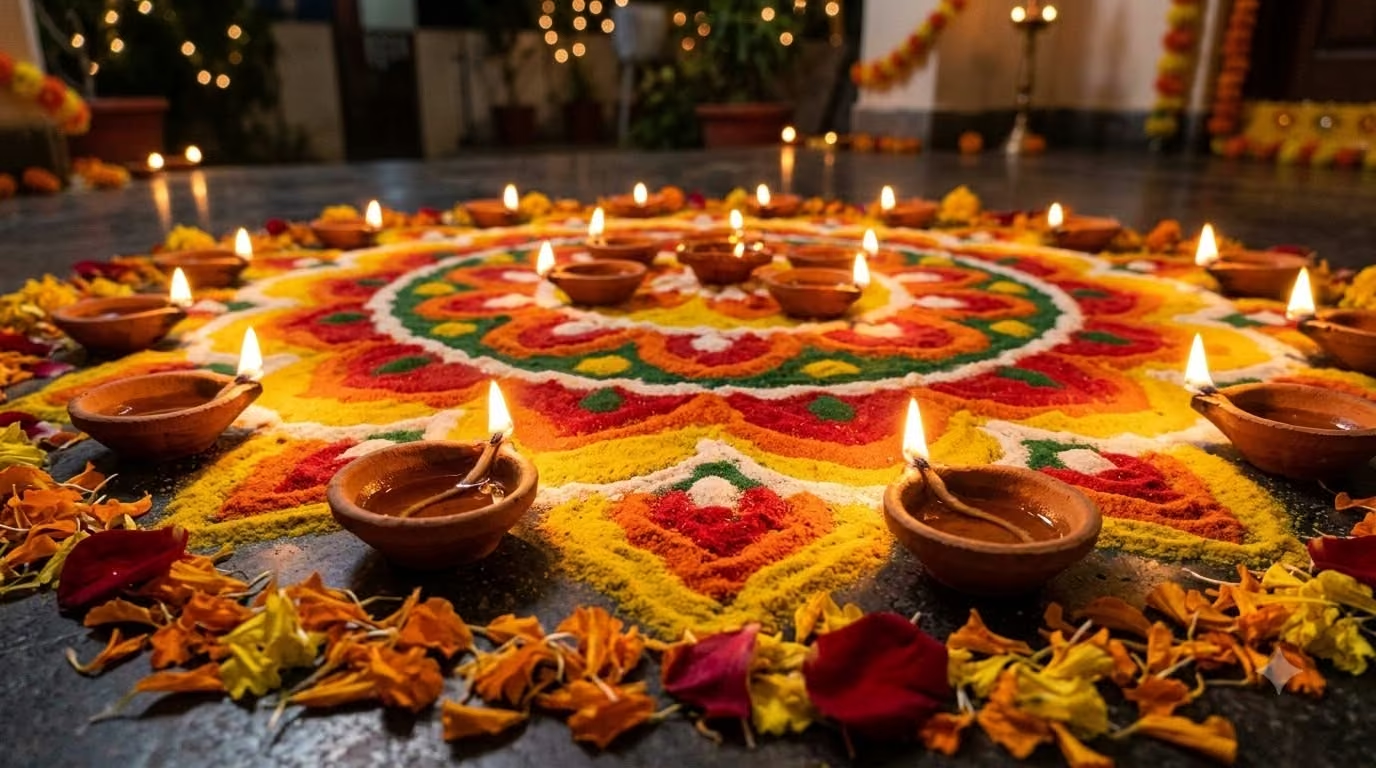
Diwali, or Deepavali ("row of lamps"), is India's most widely celebrated festival and the most important of the year for many Hindu, Jain and Sikh families. It falls on the new-moon night (Amavasya) of the Hindu month of Kartik, in October or November, and it is the high point of a five-day festival that begins with Dhanteras and ends with Bhai Dooj. Homes, shops and temples are cleaned and lit with diyas (clay oil lamps), the floors are decorated with rangoli, sweets are exchanged, and fireworks light the sky. The festival expresses the triumph of light over darkness, knowledge over ignorance, and good over evil.
Many stories, one festival
There is no single origin story, and the meaning of the festival changes from region to region.
- In much of North India, Diwali remembers the return of Rama to Ayodhya after defeating Ravana, when the city lit lamps in welcome.
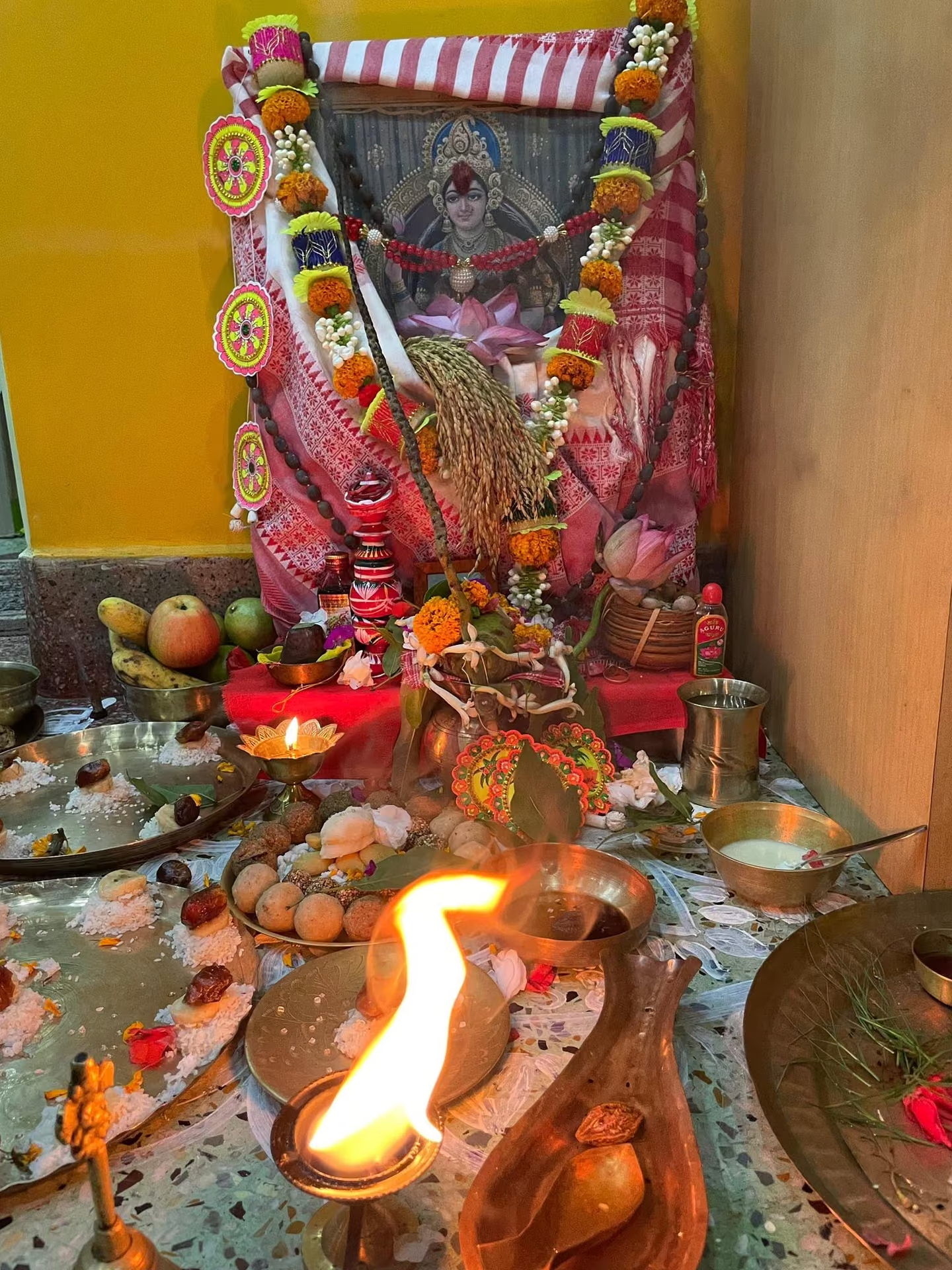
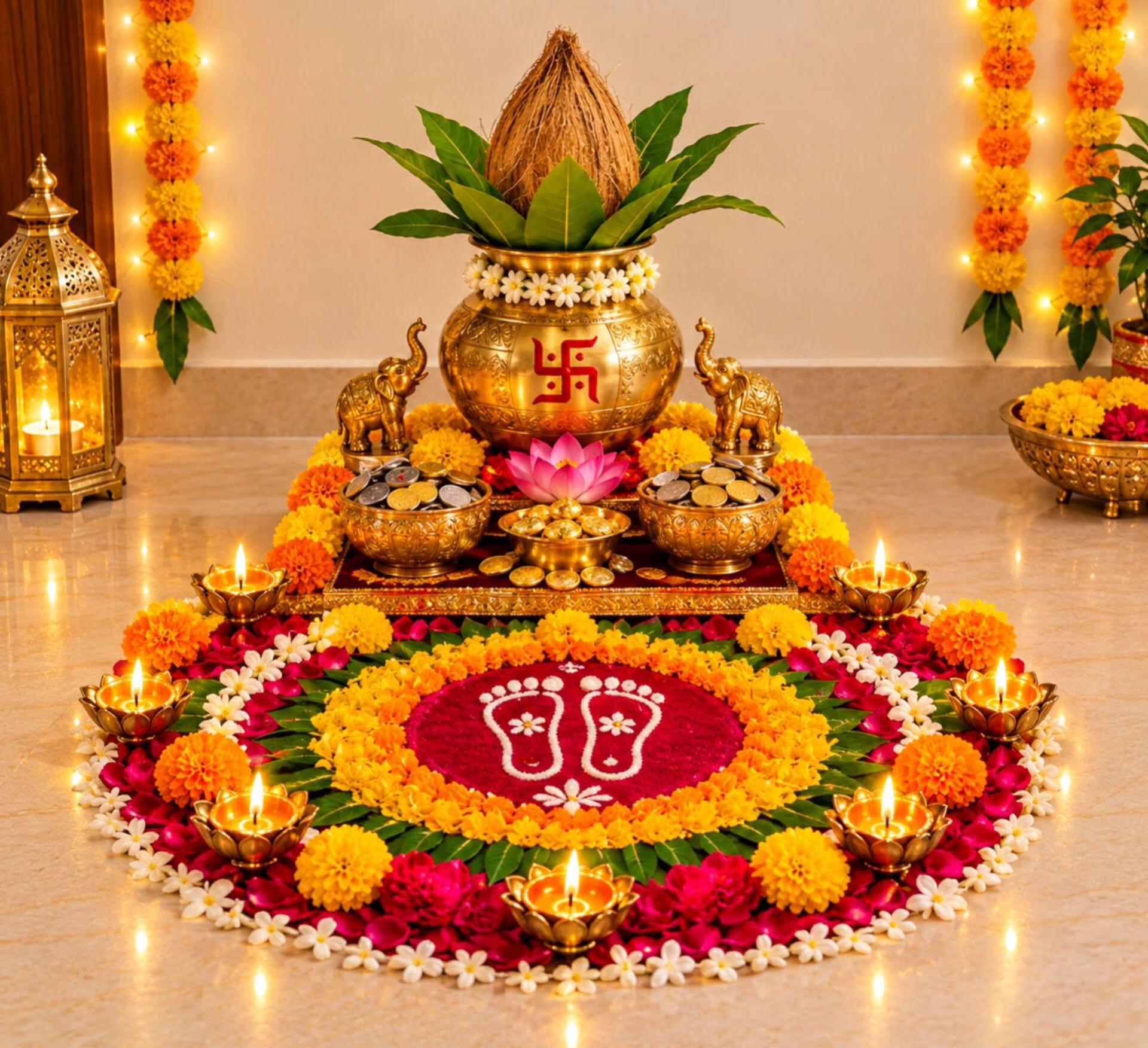
- Across the country, the main evening is dedicated to Lakshmi, the goddess of wealth and fortune, who is invited into clean and well-lit homes, often together with Ganesha.
- In South India, and especially in Tamil Nadu, Deepavali is observed on Naraka Chaturdashi morning, in remembrance of Krishna slaying the demon Narakasura.
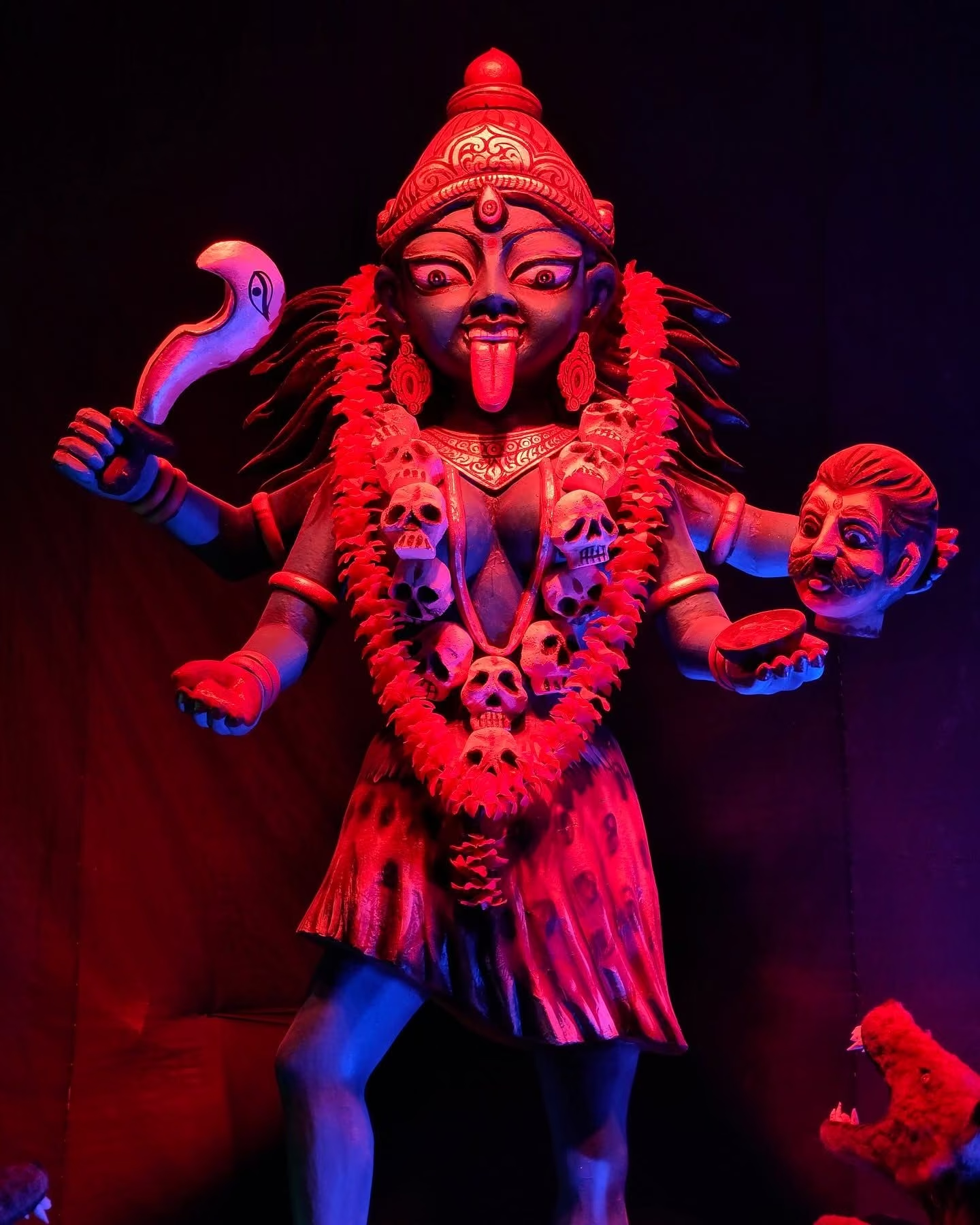
- In West Bengal, Odisha and Assam, the Amavasya night is dedicated to Kali rather than Lakshmi.
- For Sikhs, the day is Bandi Chhor Divas, associated with Guru Hargobind. For Jains, it is linked with the nirvana of Mahavira.
The five days
The festival is counted from Dhanteras to Bhai Dooj. The dates are set by the lunar calendar and by Delhi's sunrise, so a regional almanac can differ by a day.
- Dhanteras (day 1): the thirteenth lunar day of the dark fortnight, when families buy something new in metal and light a lamp for Yama, god of death.
- Naraka Chaturdashi / Choti Diwali (day 2): the oil bath at dawn, and the first lamps; Deepavali itself in the South.
- Lakshmi Puja (day 3): the main Diwali night, worship in the evening, rows of lamps and fireworks.
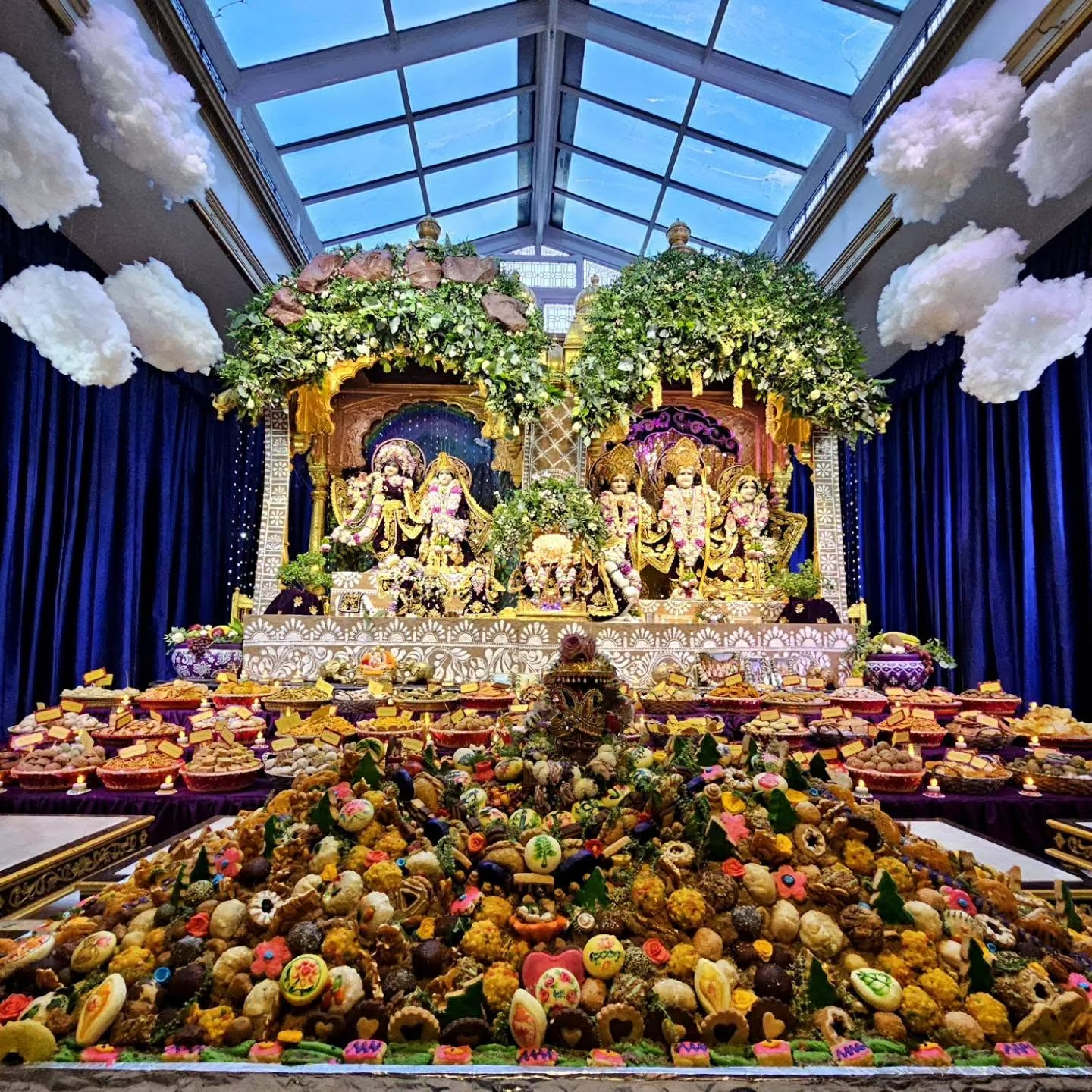
- Govardhan Puja / Annakut (day 4): offering a mountain of food to Krishna, the day after Diwali.
- Bhai Dooj (day 5): sisters apply tilak to their brothers' foreheads.
In 2026 the five days run from 6 to 11 November, because a lunar day is skipped between Diwali and Govardhan Puja; in 2027, they run from 27 to 31 October. Each day has its own page here.
Where to experience it
The best Diwali travel experiences are place-specific:
- Varanasi: lamps and aarti on the Ganga ghats; Dev Deepawali follows fifteen days later.
- Jaipur: the old city's bazaars are lit and thronged in the days before.
- Amritsar: Bandi Chhor Divas at the Golden Temple.
- Ayodhya: Rama traditions and lamp-lighting.
- Kolkata: Kali Puja, with large pandals and midnight worship.
- Family settings: wherever you are invited home, the festival is at its warmest.
Tips
Book trains and flights early, since the days around Diwali are among the busiest travel days of the year. Expect smoke and noise in the evening, especially in northern cities; if you are sensitive to fireworks, carry a mask and ear protection. Bring a sweet box if you are invited to a home, and ask your hosts how the festival is observed in their region.
Deities & Presences
Across the region
The same story, told on our sister sites