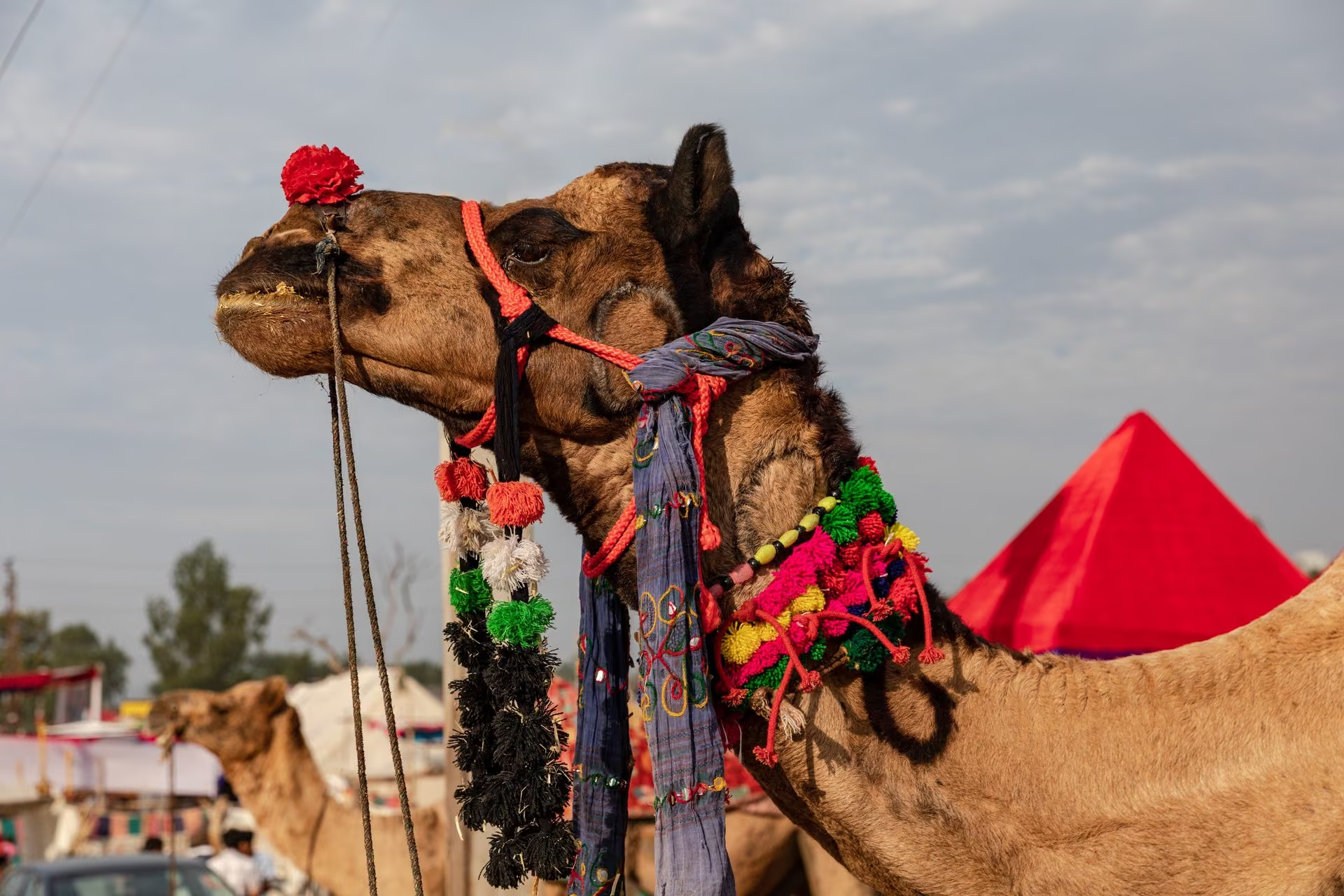
Pushkar Camel Fair
पुष्कर मेला
Also known as: Pushkar Mela, Pushkar Fair, Kartik Mela, Pushkar ka Mela
Rajasthan's famous livestock fair and pilgrimage mela at Pushkar, where thousands of camels gather beside the sacred lake and pilgrims bathe on Kartik Purnima.
Location
Pushkar, Ajmer district, Rajasthan
Duration
8 days
Month (AD)
November
Highlights
Camel and horse trading on the mela grounds, camel races and decoration contests, matka phod and longest-moustache competitions, Kartik Purnima dawn bath at Pushkar Lake, Brahma Temple, desert-camp stays.
Tips for Visitors
Book tents and rooms months in advance and expect prices to climb as Kartik Purnima approaches. Visit the livestock grounds in the early morning or late afternoon, and arrive near the start of the fair to see the camels, since traders leave early. Dress modestly, remove your shoes at the ghats and temples, ask before photographing people, and decline unsolicited ritual offers at the lake. Carry warm layers, as desert evenings are cold in November.
The Pushkar Camel Fair, locally the Pushkar Mela or Kartik Mela, is one of Rajasthan's biggest livestock fairs and one of India's great pilgrimage melas. Each year in the Hindu month of Kartik, thousands of camels, horses and cattle are brought to the sand flats beside Pushkar, a small town in Ajmer district, and the fair builds to Kartik Purnima, the full-moon day, when pilgrims bathe at dawn in the sacred lake. The fair is commonly said to attract over 200,000 people.
Origin and legend
Pushkar's sanctity comes from the Padma Purana. In the story, Brahma, the creator, killed the demon Vajranabha with a lotus flower; where its petals fell, springs rose and formed three lakes, the largest being Pushkar Lake. Brahma then performed a yagna (fire sacrifice) on its banks. As the ritual required his wife, and Savitri was late, he took another consort to complete it, whereupon Savitri cursed him that he would be worshipped nowhere else. The one exception was Pushkar, which is why the Brahma Temple here is among the very few temples to Brahma in the world.
The Brahma Temple, about 15 km from Ajmer, is of marble and stone with a red spire (shikhara) and a hamsa (swan) motif. Rajasthan Tourism describes the shrine as ancient but the present structure as dating from the 14th century. The lake is ringed by temples, pavilions and 52 bathing ghats, and a dip in the lake followed by a visit to the temple is said to wash away sins. The fair itself grew out of this pilgrimage season: people travelled to bathe in the lake at Kartik Purnima, and traders, herders and livestock traders gathered at the same time.
What happens
The official fair programme runs for roughly a week, ending on Kartik Purnima, but livestock traders arrive earlier and leave earlier, so the best time to see the animals is at the start.
- The livestock market. On the fairground, camels are washed, clipped, decorated and bargained over, and horses and cattle are traded as well. Early mornings and late afternoons are the best times to wander among the animals.
- Cultural programme. The state tourism department organises competitions and shows: camel races and camel dances, a women's and men's tug of war, the matka phod (pot-breaking), a longest moustache contest, a bridal competition, folk music and dance. In recent years an exhibition football match between a local club and a team of foreign tourists has been part of the programme.
- Kartik Purnima. On the full-moon day, tens of thousands of pilgrims bathe at the lake at dawn and visit the Brahma Temple.
- Market stalls. Stalls sell bangles, textiles, leather, camel-related crafts and street food.
Where and how to watch
The fairground (the mela maidan) lies on the edge of town, with the lake ghats and Brahma Temple in the centre. Tented camps near the fairground are popular, so book early. The nearest big city is Ajmer, 15 km away.
Pushkar is a pilgrimage town as well as a tourist stop. Dress modestly, follow the instructions of ghat priests and temple staff, decline unsolicited offers to guide you through offerings at the lake, and ask before photographing people bathing or praying.