Dev Deepawali
देव दीपावली
Also known as: Dev Diwali, Kartik Purnima in Varanasi, Tripurari Purnima, Diwali of the Gods
Varanasi's festival of a million lamps on Kartik Purnima, when the ghats of the Ganga are lit with earthen diyas and the grandest Ganga aarti of the year is performed.
Location
Dashashwamedh Ghat and the ghats of Varanasi
Duration
5 days
Month (AD)
November
Highlights
Over a million diyas along the ghats from Ravidas Ghat to Rajghat, grand Ganga aarti at Dashashwamedh, Kartik snan at dawn, lamps set afloat on the river, boat views of the lit ghats.
Tips for Visitors
Book Varanasi rooms and boats weeks ahead, since the city is at its fullest on this night. Reach the ghats well before sunset because the lanes fill up. Watch from a boat or a rooftop for the full view. Wear shoes you can walk in over wet steps, keep valuables secure in the crowd, and follow the police instructions on crowd and boat capacity.
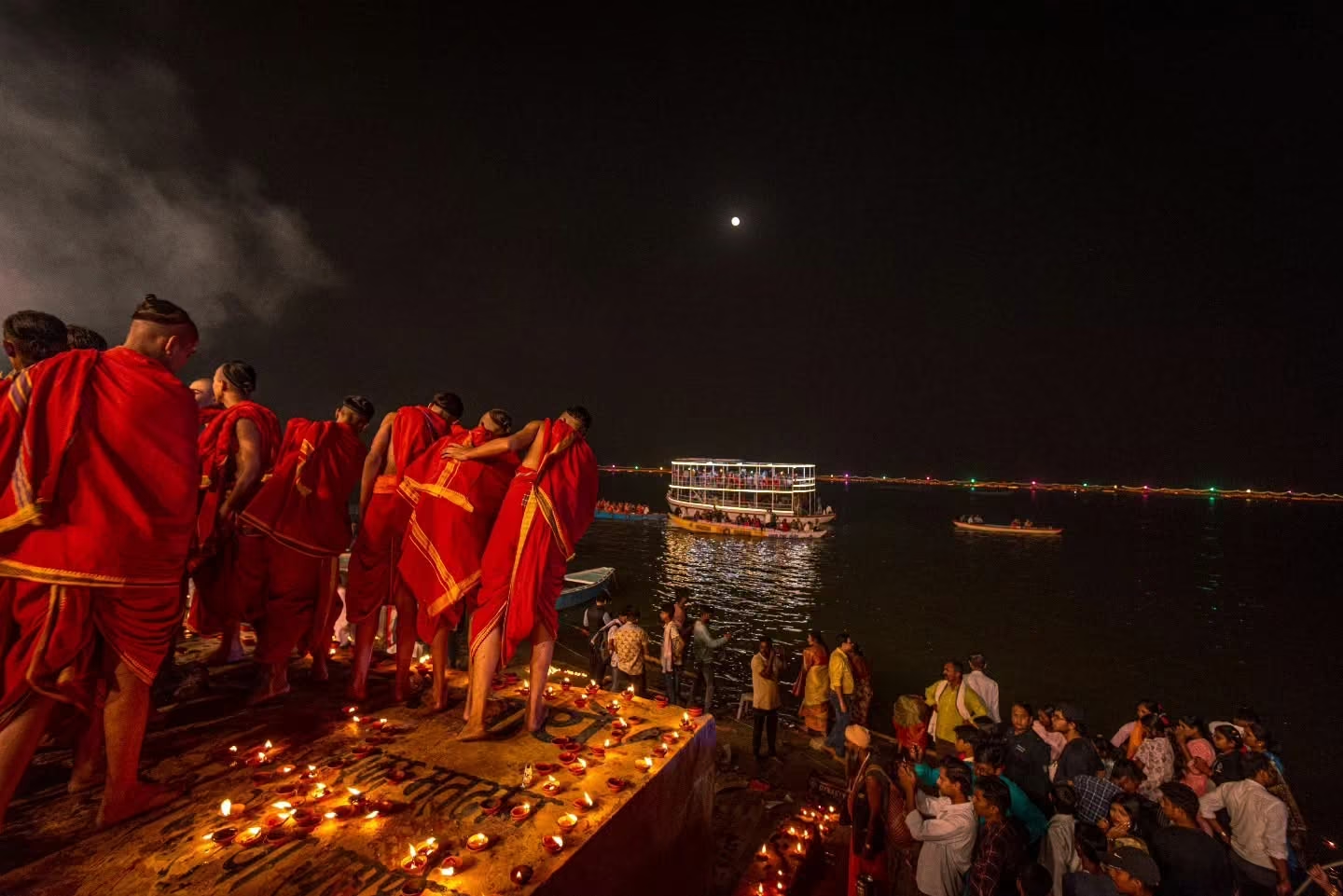
Dev Deepawali, the "Diwali of the Gods", is the festival of Kartik Purnima in Varanasi. On the full-moon night of the Hindu month of Kartik, about fifteen days after Diwali, the steps of nearly every ghat on the Ganga, from Ravidas Ghat at the southern end to Rajghat in the north, are lit with more than a million earthen lamps (diyas). The belief behind it is that the gods descend to earth on this night to bathe in the Ganga, and the city lights the river's edge to welcome them.
Origin and legend
The festival is not connected to the Ramayana's story of Rama's return, which belongs to ordinary Diwali. Instead it draws on the Puranic and Mahabharata tradition around the full moon of Kartik. Kartik Purnima is also observed as Tripurari Purnima or Tripura Purnima, remembering the victory of Lord Shiva over the demon Tripurasura; Varanasi, Shiva's city, treats it as a night of triumph over darkness. The day is also called Tripura Purnima Snan for the sacred bath in the river.
A related custom is Akashdeep: from Sharad Purnima to Kartik Purnima, devotees in Varanasi hang lamps on tall bamboo poles at the ghats, lighting the sky for the souls of ancestors and for the gods. Dev Deepawali is the culmination of that month-long vigil. As a mass public spectacle, the festival is much newer than its rituals. Writers on Varanasi note that in the 1980s it was something locals and pilgrims simply observed, with little fanfare; the tradition of lighting the lamps at Dashashwamedh Ghat in its present form is traced to 1991, and in recent years the Uttar Pradesh government has promoted it as a major tourism event.
What happens
The festival is generally described as running for five days, from Prabodhini Ekadashi (the 11th day of the lunar fortnight) to Kartik Purnima itself.
- Morning: the Kartik snan. Pilgrims bathe in the Ganga before dawn. The riverfront is dense with bathers, priests on wooden platforms, and families making offerings.
- Daytime: ghat decoration. Houses along the river are decorated with oil lamps and coloured designs at their doorways, and processions of decorated deities move through the streets.
- Evening: deepdan. At dusk, devotees offer lamps (deepdan) to Ganga, setting oil lamps afloat on the river and placing them on every step. The grandest Ganga aarti of the year is performed at Dashashwamedh Ghat and at other major ghats.
- Tribute to the fallen. On the same evening, wreaths are laid at the Amar Jawan Jyoti at Dashashwamedh Ghat to honour soldiers who died in service, in a ceremony involving the police, the armed forces and the university.
- Night: the river as a stage. Boats packed with onlookers drift along the riverfront, where the ghats glow from Ravidas Ghat to Rajghat.
Where and how to watch
The best way to see the whole spectacle is from a boat on the Ganga, starting at dusk, which lets you pass the full line of lit ghats and see the aarti from the water. Book a boat (or a place on a rooftop or balcony overlooking Dashashwamedh Ghat) well in advance, because availability falls in the days before. On land, the lanes down to the main ghats become very crowded, so plan your route and your exit before the aarti begins.
The ghats are bathing places and cremation grounds as well as stages: be quiet and courteous, ask before photographing people at prayer, and follow police and boat-operator instructions on crowd and boat limits.
Related
Connected places and entries worth pairing

