Hemis Tsechu
ཧེ་མིས་ཚེས་བཅུ
Also known as: Hemis Festival, Hemis Festival Ladakh, Hemis Gompa Festival
Ladakh's grandest monastery festival, when Hemis monks perform masked cham dances to celebrate the birth anniversary of Guru Padmasambhava.
Location
Hemis Monastery, near Leh, Ladakh
Duration
2 days
Month (AD)
June/July
Highlights
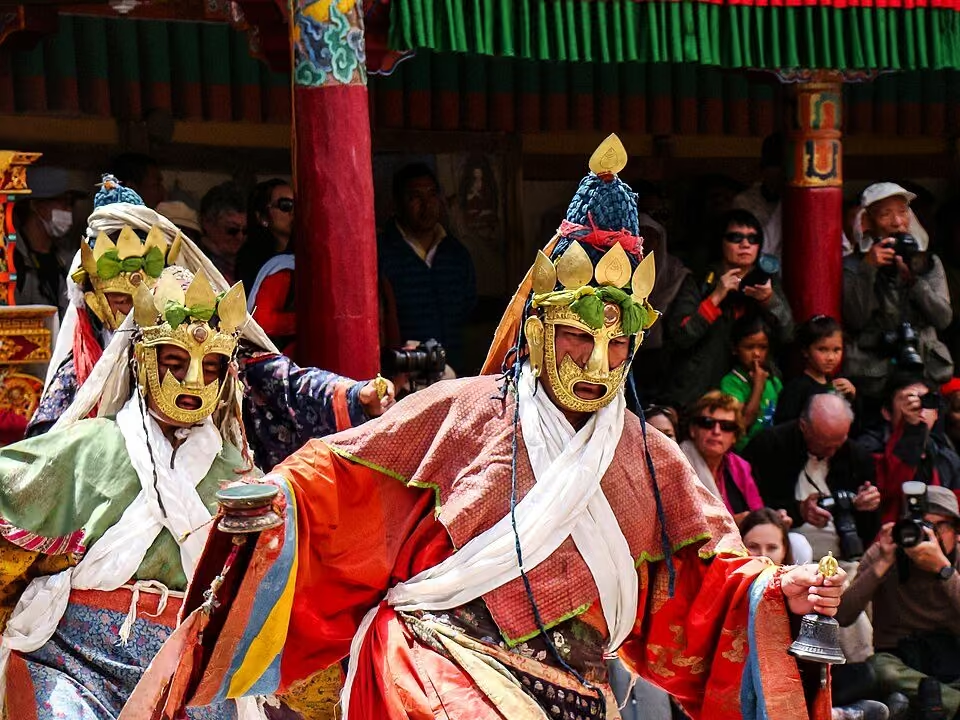
Masked cham dances in the monastery courtyard, silk costumes and painted masks, sacred rituals and blessings, Padmasambhava celebrations, the giant thangka unfurled in Monkey years, Ladakhi crafts and food.
Tips for Visitors
Dates follow the Tibetan lunar calendar and shift each year, so confirm with Hemis Monastery or Ladakh tourism before you book. Acclimatise in Leh for at least two days, arrive at the monastery early for a seat and for the morning rituals, and wear warm layers with sun protection. Stay out of the courtyard, avoid flash in the prayer halls, and ask before photographing monks. Book Leh hotels and taxis weeks ahead.
The Hemis Tsechu is the grand annual festival of Hemis Monastery, about 45 km from Leh in Ladakh. Over two days, monks of the Drukpa lineage perform sacred masked cham dances in the monastery courtyard to celebrate the birth anniversary of Guru Padmasambhava (Guru Rinpoche), the eighth-century teacher who is revered as the founder of Tibetan Buddhism. It is one of the most famous Buddhist festivals in India, and it falls in summer, when Ladakh's roads and passes are open.
Origin and meaning
Hemis Monastery is a Himalayan Buddhist gompa of the Drukpa lineage on the bank of the Indus; it was re-established in 1672 by the Ladakhi king Sengge Namgyal. The festival itself is recorded as being held year after year without a break since around 1730, in the time of Gyalsras Rinpoche, and it has become known all over the world.
Padmasambhava is honoured by the Nyingma tradition next to the Buddha, and is sometimes called the "second Buddha". According to Tibetan Buddhist tradition, he was born on the tenth day (tse-chu) of the fifth month of the Tibetan lunar calendar, which is why the festival's date moves from year to year. It is among the few major Ladakhi monastery festivals held in summer; most of the others fall in winter. The festival both praises the deeds of Padmasambhava and affirms the victory of good over evil and the protection of the Buddhist teachings.
The Monkey-year thangka
Padmasambhava is said to have been born in a Monkey year, as predicted by the Buddha. In a Monkey year of the Tibetan twelve-year cycle, Hemis displays its huge thangka (sacred painted banner) of the Guru as part of the festival. This is the occasion that comes once in 12 years; in other years the festival is celebrated with the dances alone.
What happens, day by day
The festival lasts two days and takes place in the large rectangular courtyard in front of the monastery's main door. A raised seat for the presiding lama is set up, along with a table holding offerings of holy water, uncooked rice, and tormas (ritual dough-and-butter figures). Musicians with long horns, large drums and cymbals sit to one side, with a space for the seated lamas.
- Opening prayers. The festival opens on the first morning with prayers and masked dances by the monks.
- Cham dances. Monks in silk brocade robes and painted wooden masks perform a series of dances representing the victory of good over evil, with deities, guardians and demons. Each dance has its own mask, costume, and meaning, and the courtyard fills with sound from the long horns, drums and cymbals.
- Blessings. The observance of these rituals is believed to give spiritual strength and good health, and the dances are said to subdue disease and conquer evil spirits.
- The audience. Locals, dressed in their best, sit round the courtyard with visitors, and Ladakhi food, handicrafts and clothes are on sale around the monastery.
Where and how to watch
Hemis is about 45 km from Leh by road. Leh sits at about 3,500 m; allow two days to acclimatise before the festival, and book hotels in Leh weeks ahead, as the town fills up for the festival season. Arrive a day early, since the early-morning rituals are the most atmospheric part, and the courtyard fills up quickly.
Photography of the dances is allowed, but follow instructions: do not step into the courtyard, do not use flash inside temple halls, and ask before taking close-up portraits of monks or elders. Dress warmly even in summer, because mornings in the courtyard are cold.
Across the region
The same story, told on our sister sites
Related
Connected places and entries worth pairing

