The Sibling Festival
Bhai Dooj ("brother's second") closes the five-day Diwali festival. It falls on the second day (dwitiya) of the bright fortnight of Kartik, and is also known as Yama Dwitiya or Bhratri Dwitiya. Sisters put a tilak on their brothers' foreheads, feed them and pray for their long life, and brothers give a gift in return. In 2026 it falls on 11 November, and in 2027 on 31 October.
The Story of Yama and Yamuna
The oldest account is in the Skanda Purana (Kartikamasa Mahatmya). Yamuna repeatedly invited her brother Yama, the god of death, to her home. When he finally went on the second day of the bright half of Kartik, she welcomed him with a feast and honoured him. Pleased, Yama declared that those who visit a sister and take a meal at her home on this day are freed from fear of death and hell. For this reason people also traditionally bathe in the Yamuna on the day.
Other legends are told. In one, Krishna visits his sister Subhadra after slaying Narakasura, and she welcomes him with flowers, a lamp and a tilak. In Jain tradition, King Nandivardhan, grieving the nirvana of his brother Mahavira, was consoled by his sister Sudarshana.
What Happens
- The tilak. A sister makes a mark of sandalwood paste and red roli or kumkum on her brother's forehead with her right ring finger, presses grains of rice onto it, and may tie a sacred thread on his wrist. She then performs an aarti.
- Sweets and a meal. The brother is given sweets and a meal, often his favourite dishes, and sits in her home.
- Gifts. The brother gives a gift of clothes, money or sweets.
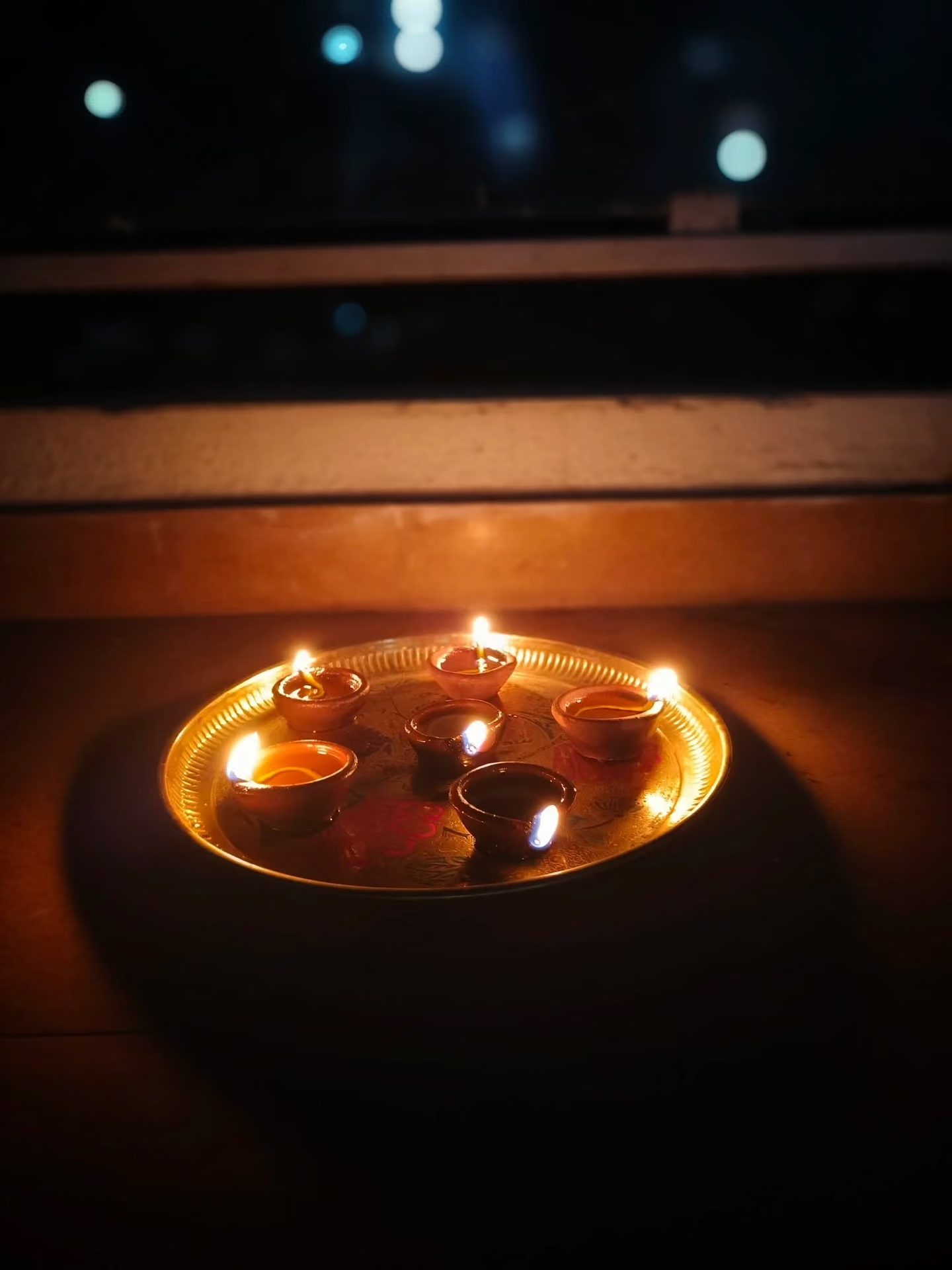
- A lamp for Yama. In the evening, a lamp with four wicks is lit outside the house in honour of Yama.
- If there is no sister. The ritual may be done with a cousin, or a friend's sister.
Many Names
The festival has local names across the country: Bhai Phonta in Bengal, Bhau Beej in Maharashtra, Bhagini Hasta Bhojanam in Telangana, and Bhai Tika in Nepal, where it is the fifth and final day of Tihar. It resembles Raksha Bandhan in its theme, but is celebrated with a tilak instead of a rakhi thread.
Where to See It
It is a family occasion, celebrated at home rather than in public. Visiting a host family on this day is a privilege.
Visitor Tips
If you are invited to a home, bring sweets. Expect busy roads on the day, as families travel to see siblings.
Deities & Presences
Part of Diwali