The Festival of Lights
Deepavali means "a row of lamps", and the lamp is the festival's central symbol. Alongside it, rangoli, the art of making designs on the floor at the entrance of a home, is the other signature of the days of Diwali. Both begin before the first day and run through all five.
Diyas
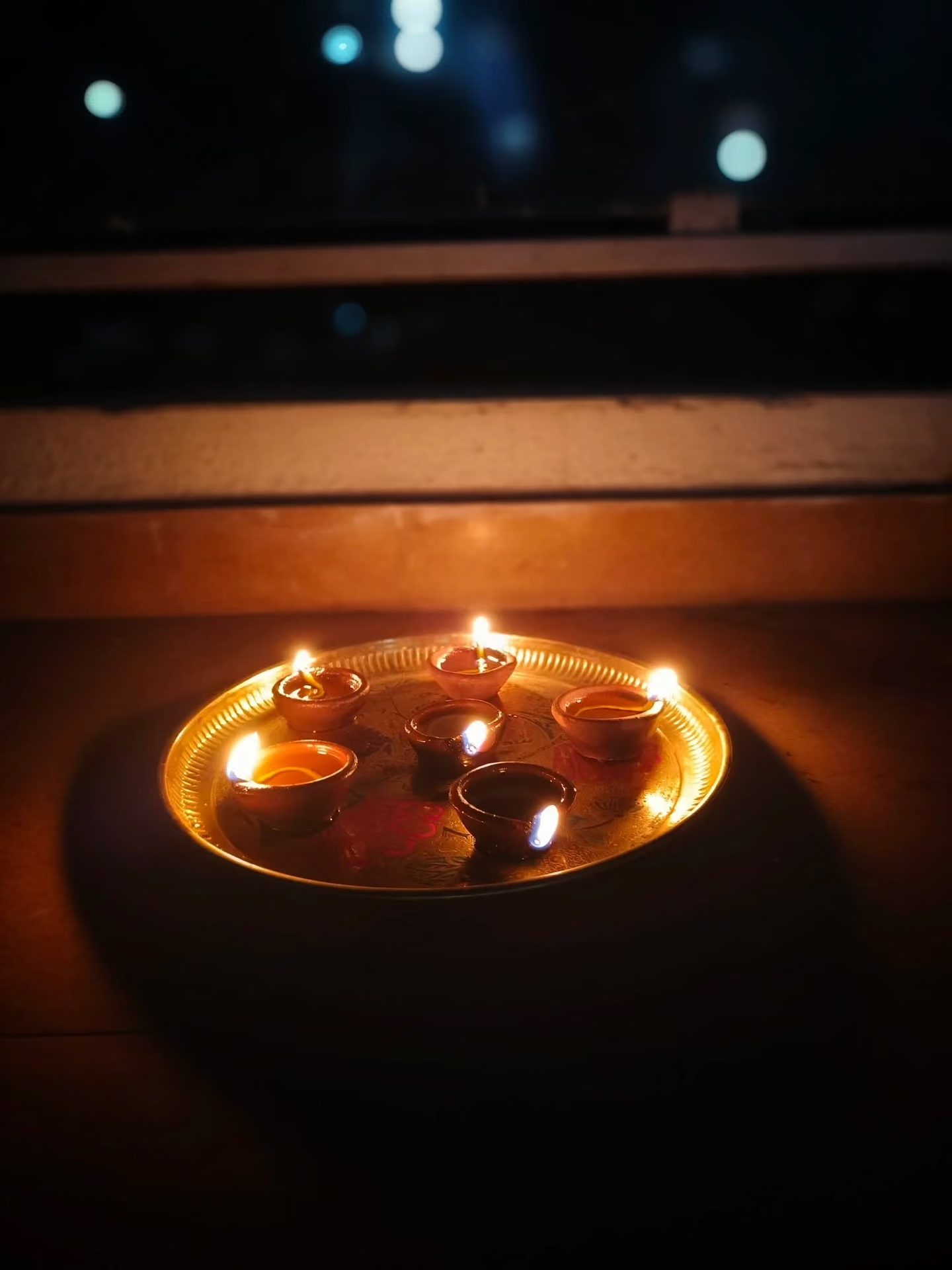
A diya is a small lamp, traditionally of fired clay, filled with oil or ghee and lit with a cotton wick. In the days before Diwali, potters' lanes and street markets fill with stacks of clay lamps, which are bought in dozens and hundreds. Families clean their homes, arrange lamps along windowsills, balconies, doorways and rooftops, and keep them burning through the main night.
Lamps are given specific roles on specific days:
- On Dhanteras, a lamp is set at the door for Yama, and others are lit at the base of the tulasi plant.
- On Naraka Chaturdashi, a four-wick lamp is lit outside the house for Yama, and others in the kitchen and under sacred trees.
- On Lakshmi Puja, lamps are lit everywhere, so that the goddess finds the house bright.
- On Dev Deepawali in Varanasi, a fortnight later, a million lamps are lit on the Ganga ghats.
Candles and electric lights are common today, but the clay diya remains the symbol.
Rangoli
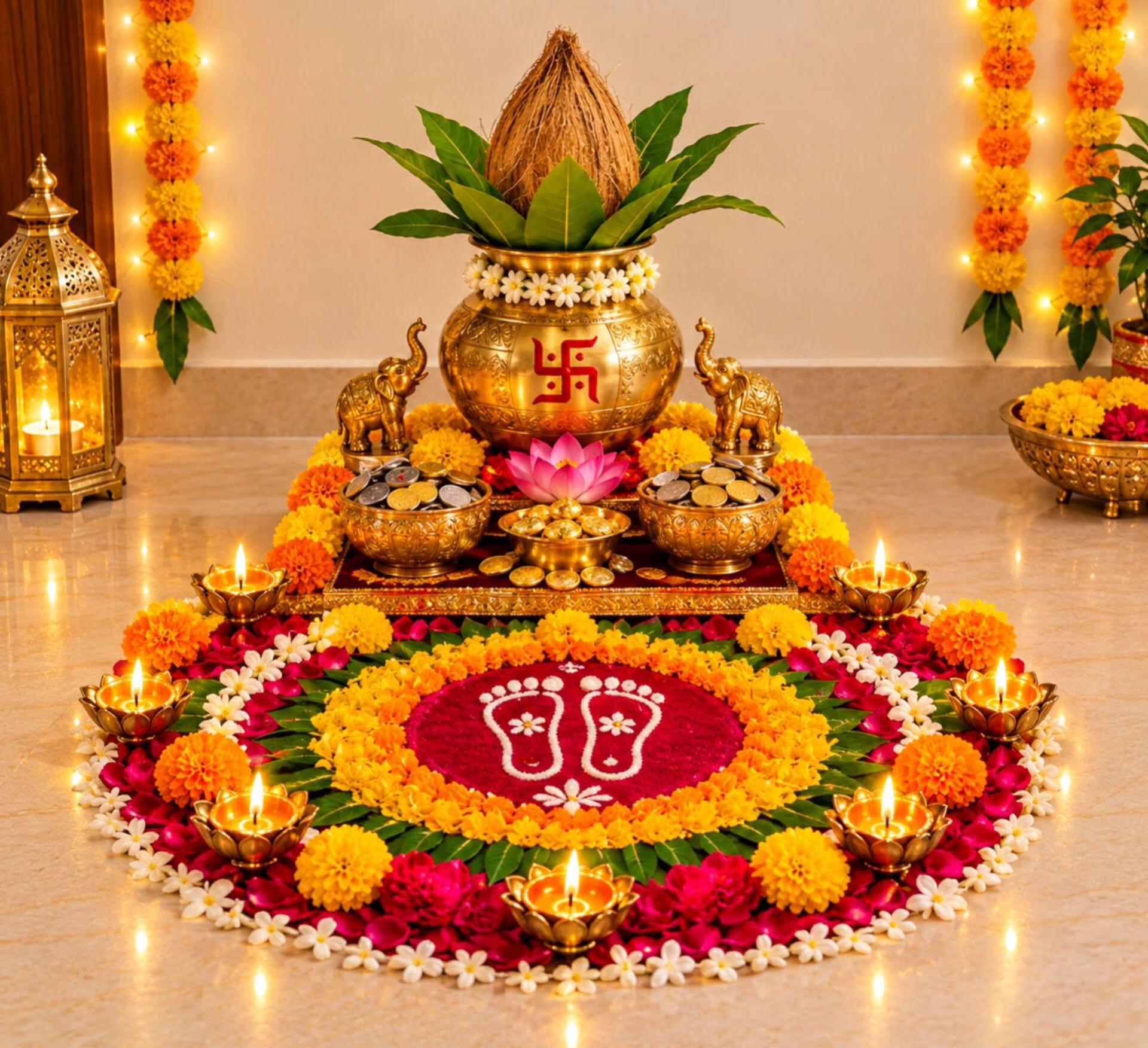
A rangoli is made at the threshold of the home to welcome guests and, at Diwali, to invite Lakshmi inside. It is drawn with coloured powder, rice flour, flower petals or coloured sand, in geometric patterns, lotus flowers, peacocks, footprints of the goddess and other auspicious motifs, and a diya is often placed at its centre. Names and styles differ by region:
- Kolam in Tamil Nadu, usually drawn in rice flour.
- Alpana in Bengal, painted with rice paste.
- Muggu in Andhra Pradesh and Telangana.
- Aipan in Uttarakhand's Kumaon region, made with rice paste and red earth colour.
- Rangoli in Maharashtra, Gujarat, Karnataka and much of North India.
The designs are often swept away by the next morning, and new ones are made each day.
Where to See It
Walk through residential neighbourhoods on the evening of Lakshmi Puja to see the doorways. Local bazaars sell lamps and rangoli supplies in the days before the festival.
Visitor Tips
Step around a rangoli rather than over it, and ask before you photograph a family's doorway. Buy a few clay diyas from a potter as a gift or souvenir, and never leave lit lamps unattended in crowded or windy places.
Deities & Presences
Rituals & Ceremonies
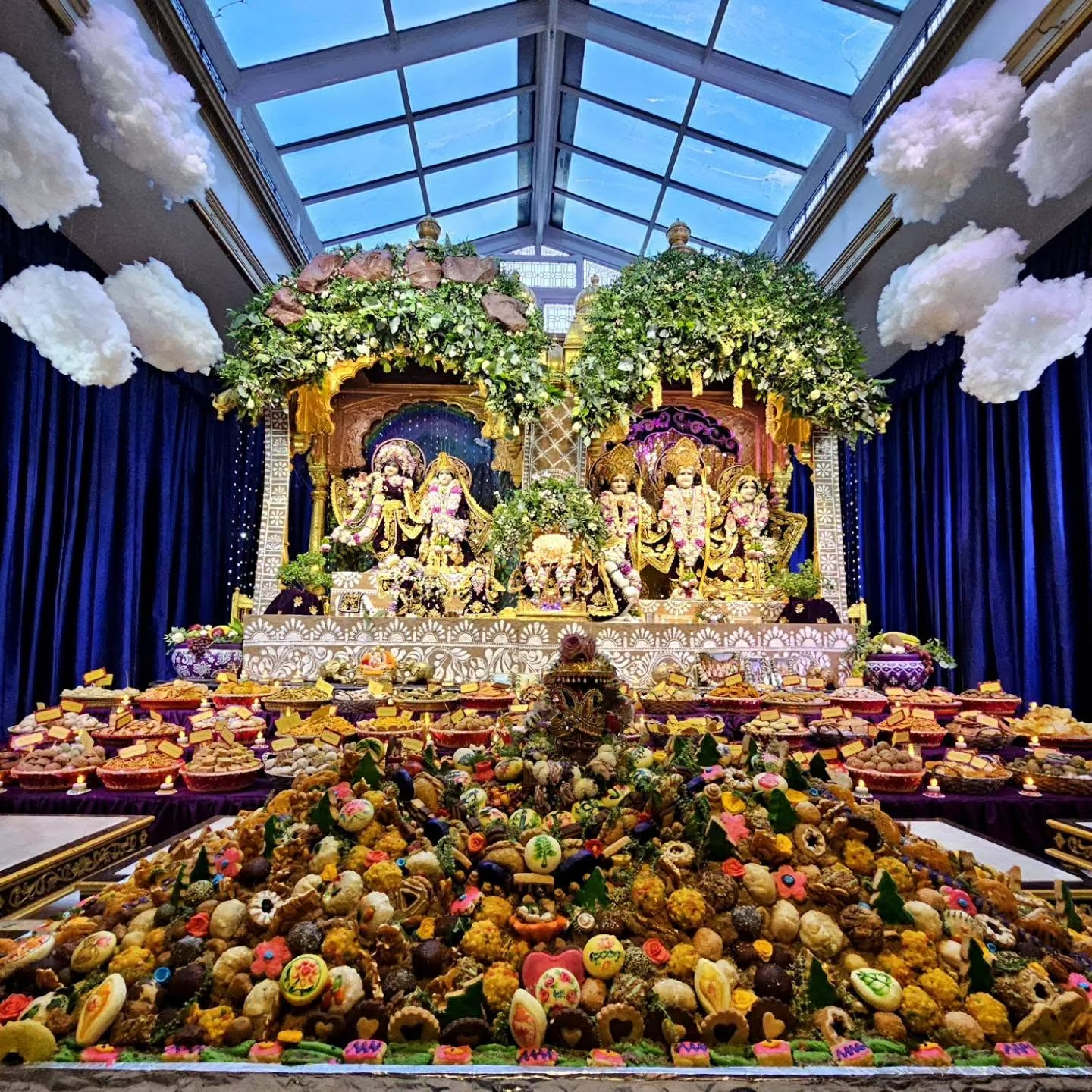
Part of Diwali