The Main Night
Lakshmi Puja is the heart of Diwali. It is performed on Amavasya, the new-moon night of the month of Kartik, the darkest night of the month, when the goddess Lakshmi is believed to roam the earth and bless homes that are clean and well lit. It is the third day of the five-day festival: in 2026 it falls on Sunday 8 November, and in 2027 on Friday 29 October.
The Setting
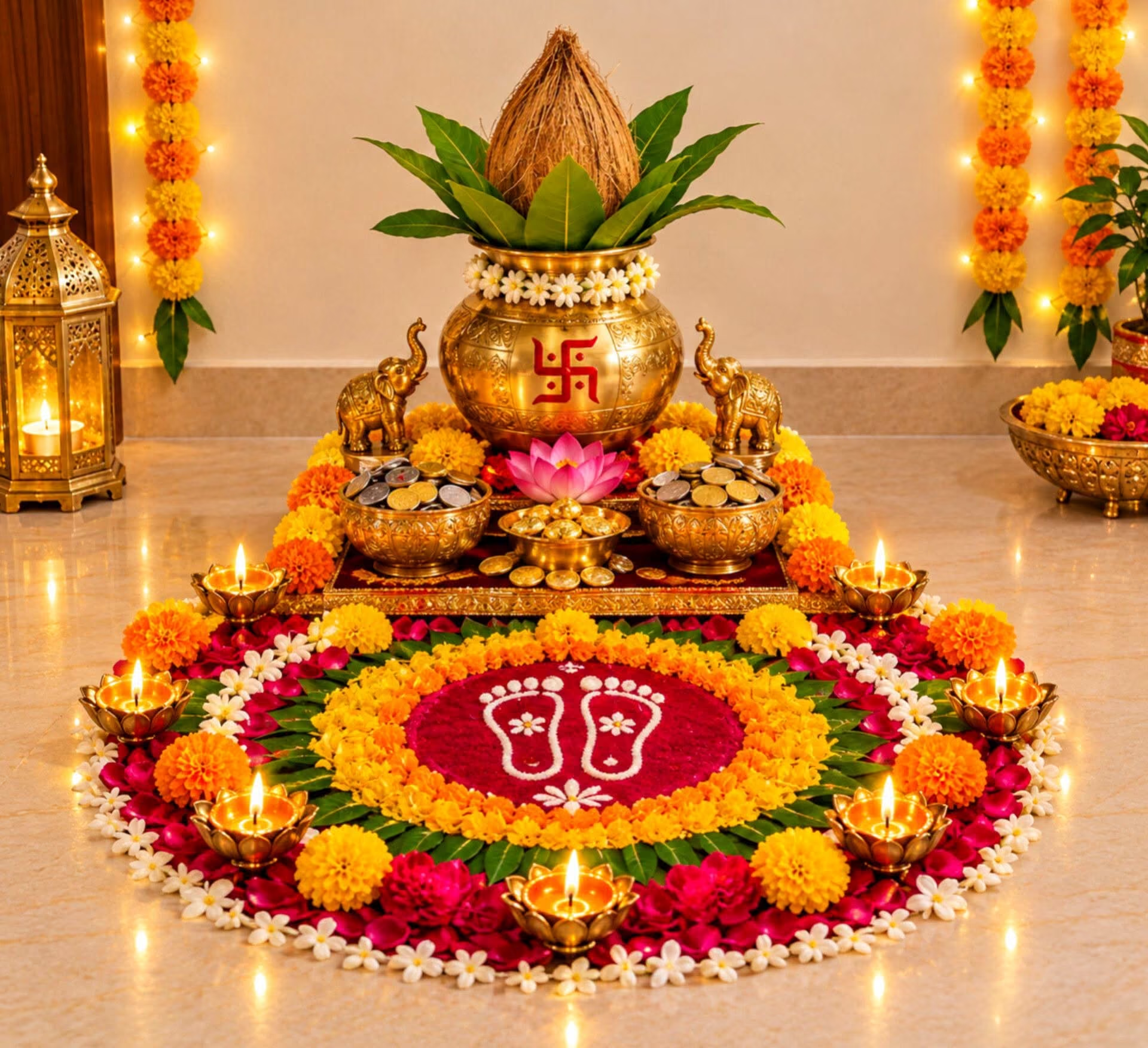
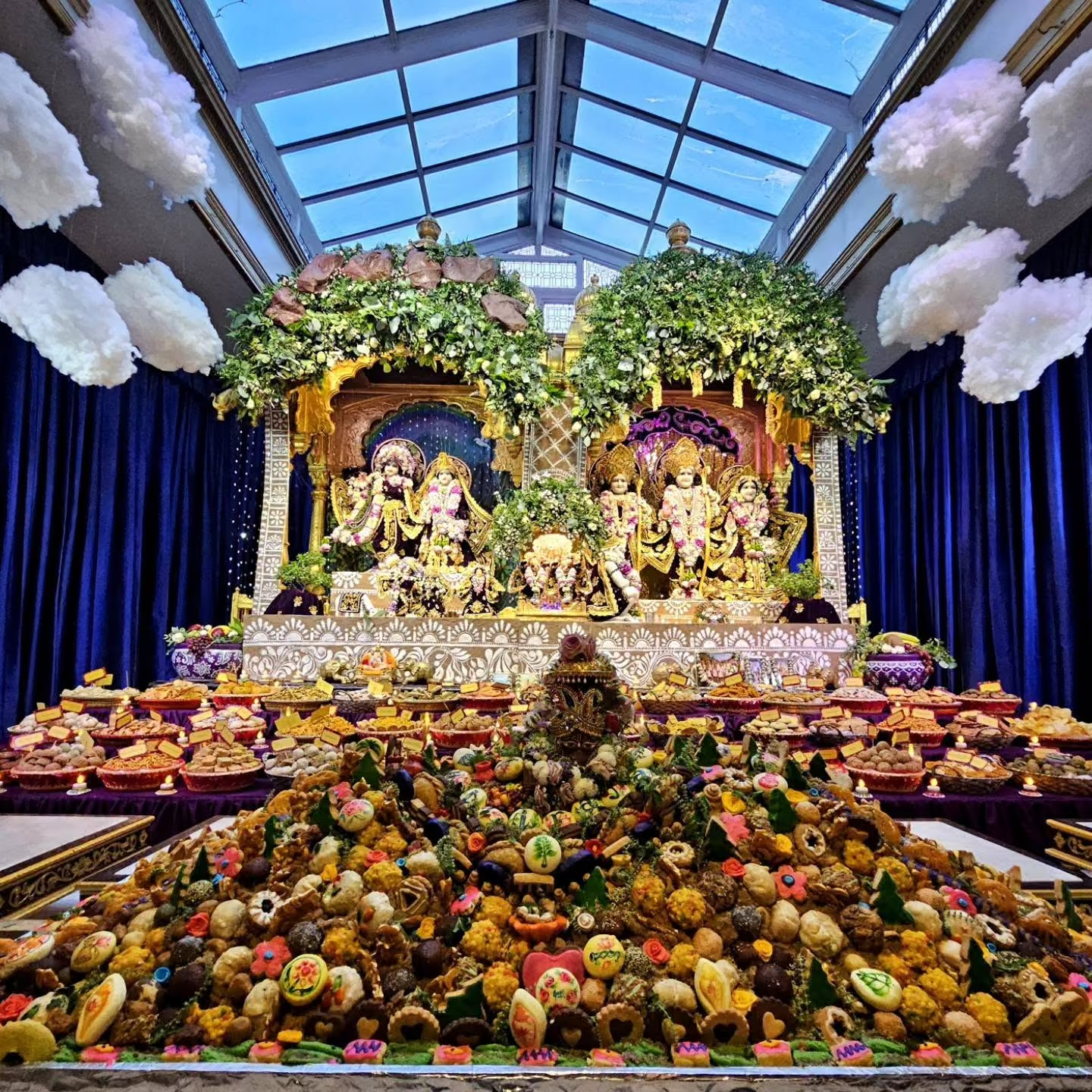
The puja is done at home, in shops and in offices. A low platform (chowki) is washed and covered with a red or gold cloth, and the idols or pictures of Lakshmi and Ganesha are placed on it, often with Saraswati and, for business families, Kubera. A lamp of ghee burns beside the deities; a kalash (water pot), flowers, coins and sweets complete the arrangement. Offerings often include kheer, batashe (sugar drops), puffed rice (kheel) and sweets.
The Auspicious Time
The almanac sets the best time for Lakshmi Puja, the Pradosh Kaal (the period after sunset), preferably in the Vrishabha lagna (the fixed Taurus rising, a stable sign believed to make wealth stay). The window differs from city to city because it follows the local sunset. For 2026, the almanac gives about 5:54–7:50 pm in New Delhi, about 5:20–7:18 pm in Kolkata, and about 6:27–8:27 pm in Mumbai; for 2027, about 6:35–8:13 pm in New Delhi. A second window at midnight, the Mahanishita Kaal, is used by those who follow tantric traditions.
What Happens After the Puja
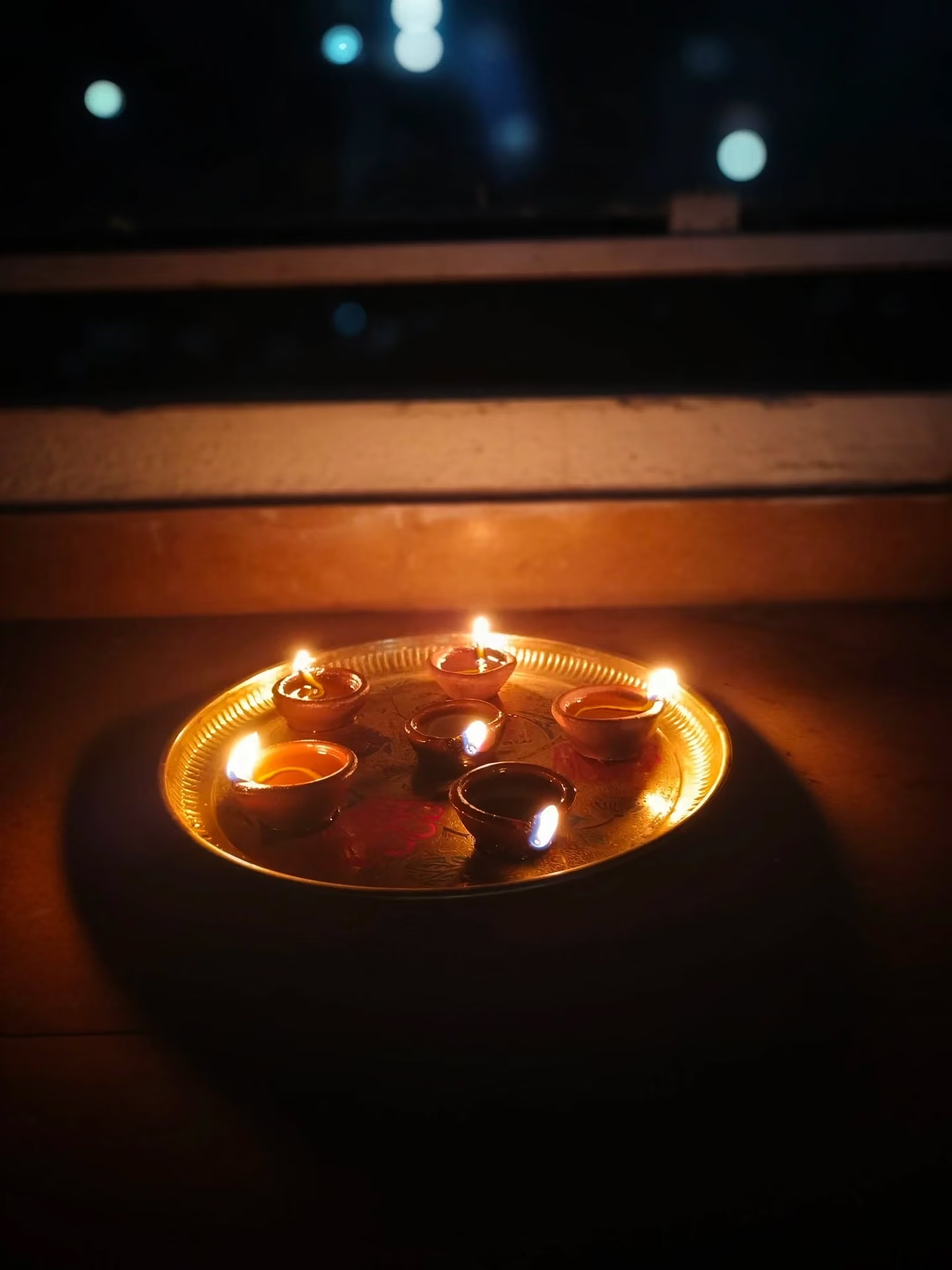
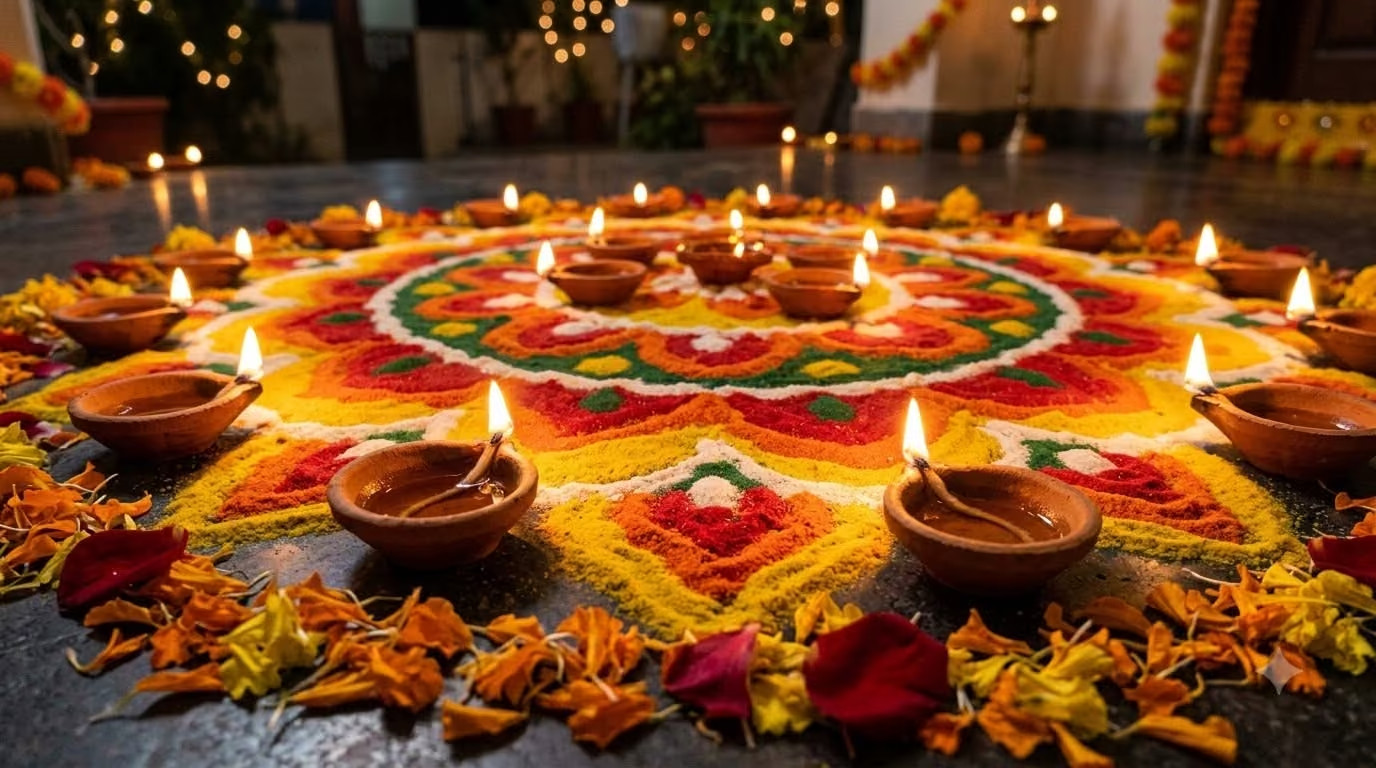
- Lamps everywhere. Diyas are lit at every doorway, window and balcony, and on rooftops and in courtyards, and the lights are kept burning through the night.
- Aarti and recitation. The family sings the Lakshmi aarti and may recite the Sri Sukta.
- Sweets and gifts. Families visit each other, exchanging boxes of sweets and dry fruit.
- Fireworks. After the puja, fireworks begin in areas where they are permitted.
- Chopda Puja. Gujarati and Marwari merchants close their old account books and bless new ones in the Chopda Puja, before the new business year begins the next day.
Regional Variations
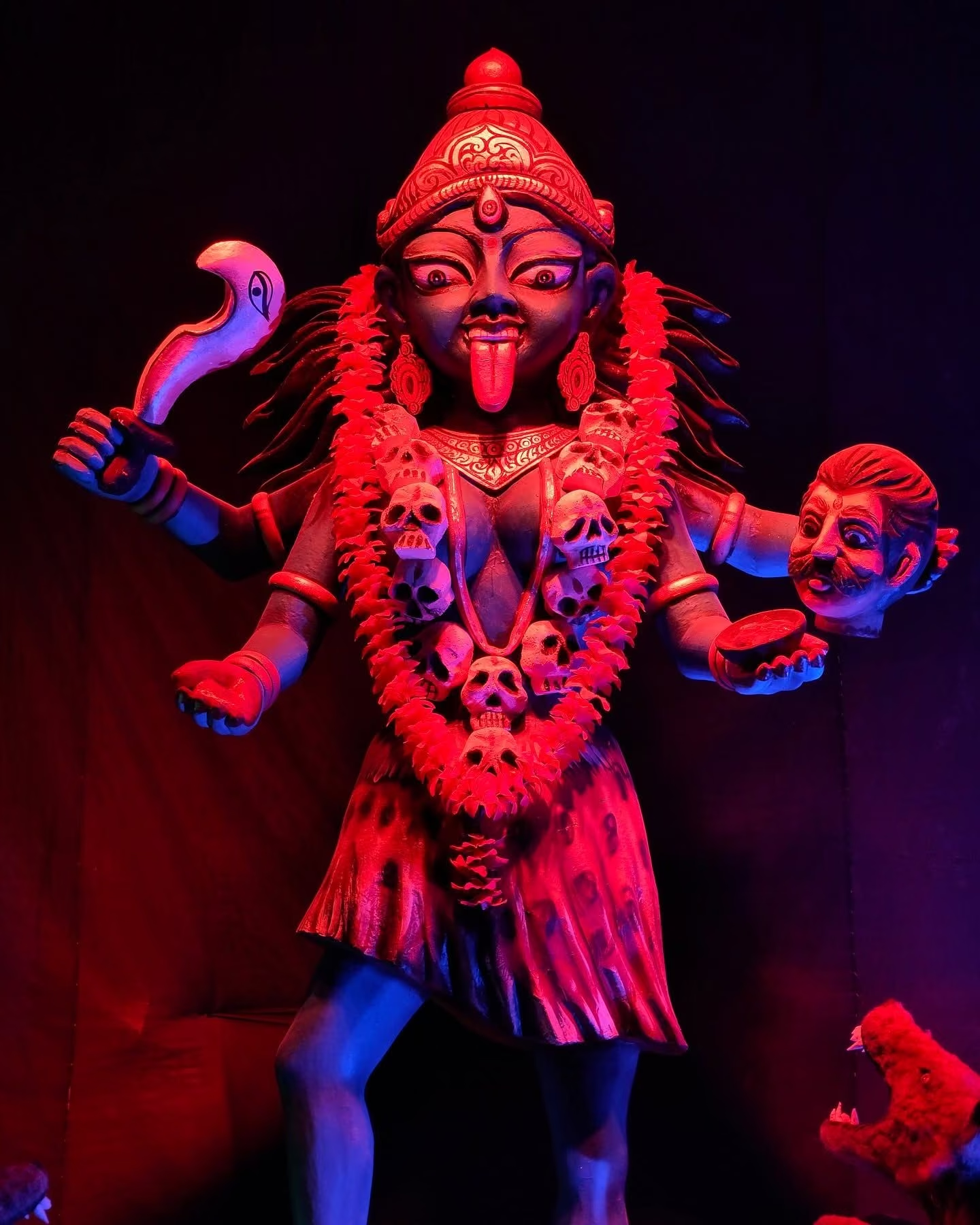
In North India the day is also linked with Rama's return to Ayodhya. In West Bengal, Odisha and Assam the new-moon night is given to Kali rather than Lakshmi (see Kali Puja). Sikhs mark it as Bandi Chhor Divas, and Jains remember the nirvana of Mahavira.
Where to See It
Walk through any North Indian bazaar after dusk: Jaipur's old city, Varanasi's ghats, Amritsar's Golden Temple and the market streets of Delhi are all lit up. Staying with a host family is the best way to see the puja itself.
Visitor Tips
Roads fill in the evening and lanes are crowded. Arrange your dinner with your host in advance, carry a torch for narrow lanes, and expect smoke after the puja.
Deities & Presences
Part of Diwali